
Materials, considered carefully
The material of an everyday essential shapes how it feels, fits and wears through the day.
At Le Verte Studio, we are not committed to any one particular fibre. We consider different materials for the qualities they can bring to comfort, practicality and everyday wear.
Some are naturally derived, some are regenerated fibres, and some are synthetic. Each has its own strengths and limitations. Our approach is to understand those differences and choose materials thoughtfully for the product they are used in.
Bamboo Viscose
Soft, smooth and breathable for everyday comfort.
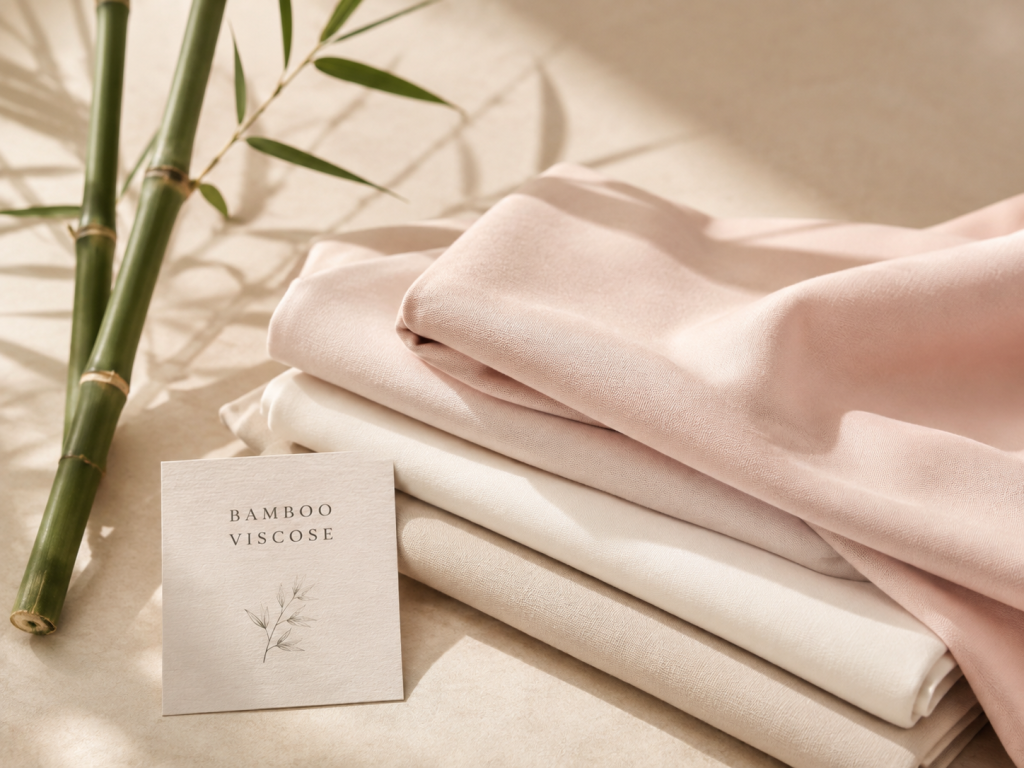
Bamboo viscose is a plant-derived fibre made from cellulose found in bamboo. The bamboo is processed to extract the cellulose, which is then dissolved and formed again into a soft textile fibre. This is sometimes described as a “regenerated cellulose fibre” —— it refers to how the fibre is made, rather than meaning that the fabric is recycled.
Bamboo itself is a fast-growing plant and can often be cultivated with relatively little irrigation land. These qualities makes it an interesting raw material, although the overall environmental impact also depends on how it is cultivated and processed.
Like many other fabrics, the manufacturing process involves chemical treatment. The impact can vary depending on the production method, how chemicals are managed, and whether processing systems are designed to recover and reuse them.
What makes bamboo viscose appealing for everyday underwear is its smooth hand feel, lightness and ability to manage moisture comfortably against the skin. It can feel soft and fluid, with a gentle drape that works well for close-to-skin garments.
For Le Verte Studio, bamboo viscose is one material option among many. We choose it where its softness, comfort and practical wear qualities suit the product.
Why we use it
– Soft and smooth against the skin
– Breathable and comfortable for everyday wear
– Helps manage moisture
– Lightweight with a fluid feel
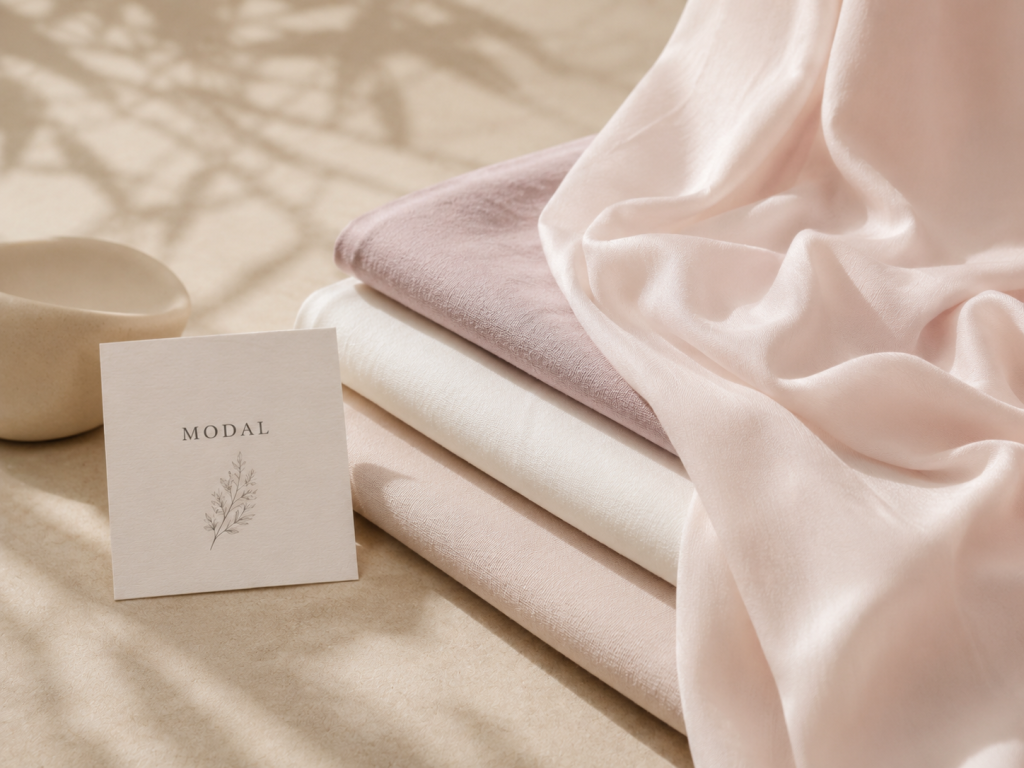
Modal
Ultra-lightweight and fluid, sitting lightly under clothing.
Modal is a cellulose-based fibre commonly made from beechwood pulp. Like bamboo viscose, it is produced by processing plant cellulose into a soft textile fibre, but the way it feels in a finished garment can be quite different.
What stands out most about modal is how light and fluid it can feel. In a fine-knit construction, it can sit very close to the body and feel less noticeable under clothing, making it especially useful when you want underwear to sit discreetly beneath softer or more fitted clothing.
That can make modal a good choice under a lightweight nightgown, a fluid dress, or close-fitting clothing where thicker fabric may feel more noticeable. It can also work well beneath fitted leisurewear or yoga clothing when the priority is a light, flexible layer rather than additional structure.
Modal also tends to move easily with the body and can feel comfortable for long periods of wear. The exact performance, however, depends on the fabric weight, knit construction and fibre blend – not simply on the word “modal” itself.
As with other regenerated cellulose fibres, its environmental impact depends on how the raw material is sourced and how the manufacturing process is managed.
For Le Verte Studio, we use modal where an ultra-light, fluid feel that sits lightly under clothing suits the intended product.
Why we use it
– Ultra-lightweight
– Sit lightly under clothing
– Fluid and flexible
– Well suited to soft or close-fitting outerwear.
Cotton
Familiar, breathable comfort for everyday wear.
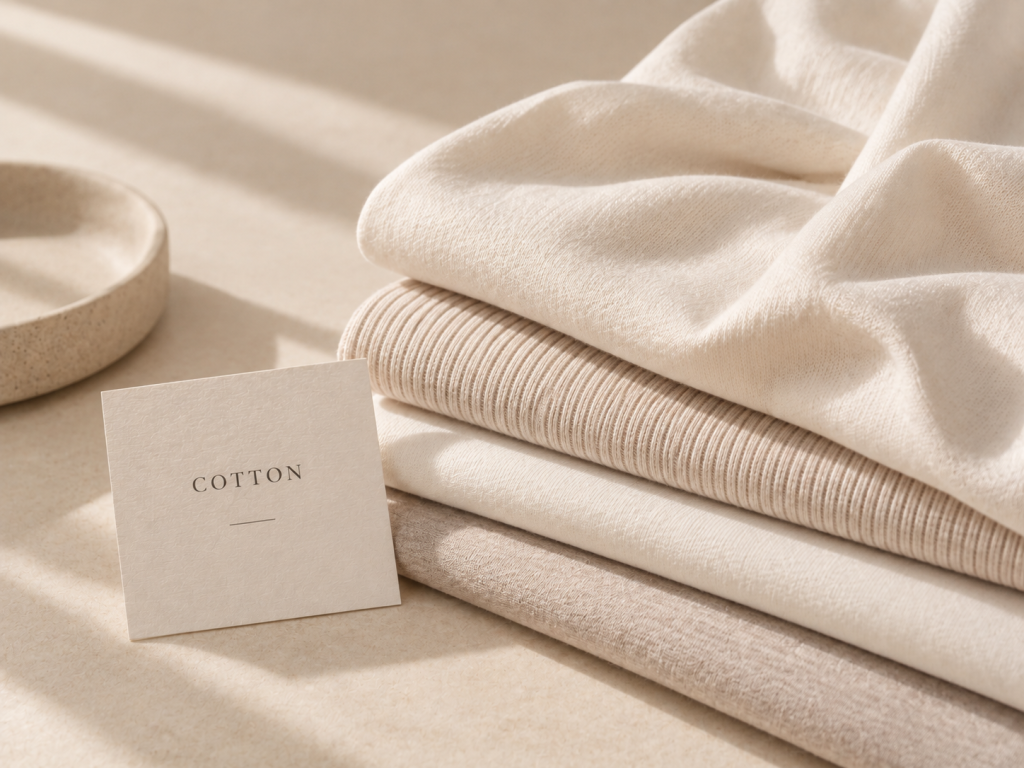
Cotton is a natural fibre that has long been used for clothing because it feels familiar, breathable and comfortable against the skin.
For everyday underwear, cotton can be especially suitable when the priority is straightforward comfort and ease of wear. It can feel reassuringly substantial without being heavy, and it works well for regular daily use, including longer hours at home, work or casual activities.
Not all cotton fabrics feel the same. The final feel depends on the yarn, knit, fabric weight, finishing and any fibres blended with it. A lightweight cotton knit can feel very different from a thicker or more structure cotton fabric.
Cotton also absorbs moisture readily, which can help it feel comfortable in normal daily wear. At the same time, because it tends to hold onto moisture longer than some other fibres, it may not always feel as quick-drying as lighter regenerated or synthetic materials.
For Le Verte Studio, we use cotton where its familiar feel, breathability and dependable everyday comfort suit the design.
Why we use it
– Familiar and comfortable against the skin
– Breathable for everyday wear
– Suitable for regular daily use
– Available in many different fabric weight and constructions
Polyamide & other synthetic fibres
Smooth, flexible and practical where the design calls for it.
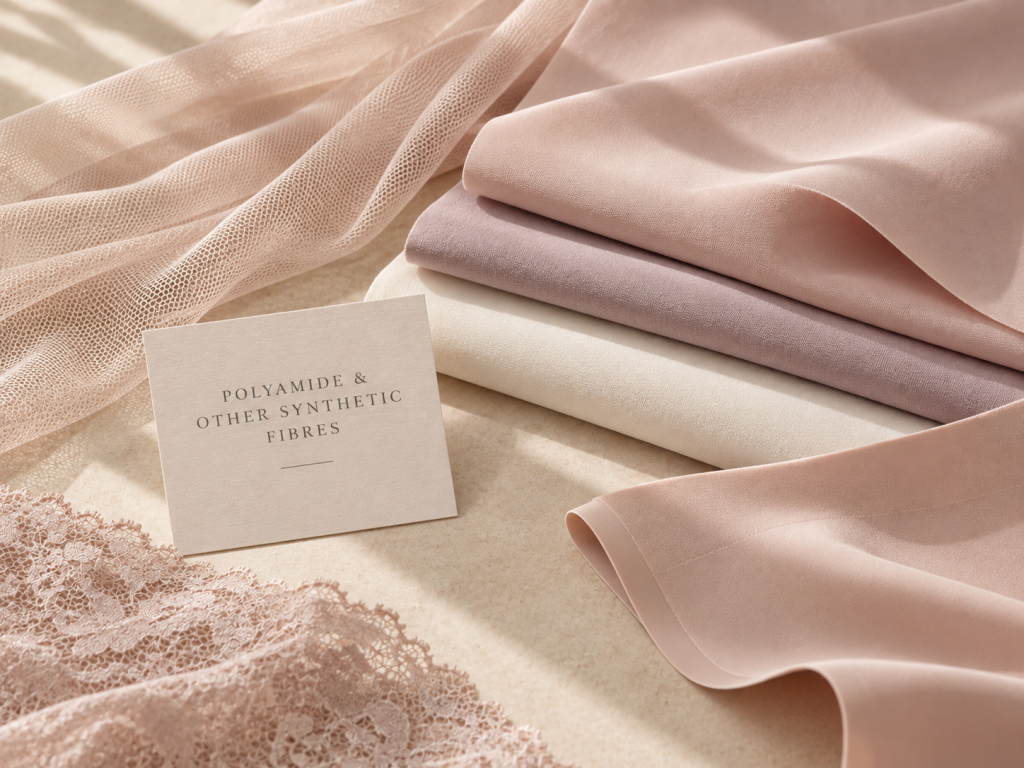
Polyamide is a synthetic fibre commonly used in underwear because it can be made very smooth, lightweight and flexible. It is often blended with fibres such as elastane to add stretch and help a garment move comfortably with the body.
One of its main strengths is versatility. Depending on how the fabric is knitted or constructed, polyamide can be used for seamless styles, fine mesh, lace, smooth everyday underwear, or garments that need good shape retention.
Synthetic fibres can also dry relatively quickly and are often useful where a lighter, smoother finish is preferred. This can make them suitable under fitted clothing where visible lines or thicker fabric may be more noticeable.
As with all materials, the final feel depends on more than the fibre name alone. Fabric weight, knit, finishing and the fibres blended with it all affect how the garment performs and feels against the skin.
For Le Verte Studio, we use polyamide and other synthetic fibres where their smoothness, stretch, lightness or construction benefits suit the product.
Why we use it
– Smooth and lightweight
– Stretch-friendly when blended with elastane
– Suitable for seamless, mesh and lace constructions
– Holds its shape well
– Can dry relatively quickly
How we choose materials
The right material depends on the product.
No single fibre is perfect for every purpose. What feels right in one style may not be the best choice for another.
At Le Verte Studio, we consider the material together with the fit, construction and intended use of the product. We look at how it feels against the skin, how it moves with the body, how it performs through the day, and whether it adds something useful to the overall design.
That may mean choosing cotton for familiar everyday comfort, modal for a lighter layer under fitted clothing, bamboo viscose for soft everyday wear, or synthetic fibres where stretch, smoothness, shape retention or seamless construction are important.
Our approach is not to favour one material simply because it is natural, regenerated or synthetic. We prefer to understand what each material can offer, where its limitations may lie, and use it where it makes sense.